
El Dorado: Myth or Real Lost City of Gold?
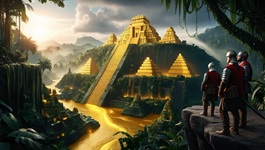
El Dorado: The Legendary Lost City of Gold – Myth or Reality?
For centuries, the name El Dorado has sparked dreams of unimaginable wealth — a glittering lost city of gold hidden somewhere in the jungles of South America. Explorers risked (and often lost) their lives chasing this golden paradise.
But is El Dorado a myth or real?
The answer lies not in a forgotten metropolis overflowing with treasure, but in a beautiful cultural ritual that Spanish conquistadors misunderstood and wildly exaggerated.
In this post, we’ll uncover the true origins of the El Dorado myth, trace how it evolved into an obsession, explore its modern echoes (including El Dorado in KGF), and explain why the fabled city of gold never existed as Europeans imagined.
By the end, you’ll see how one powerful misunderstanding shaped centuries of history.
The Real Meaning of El Dorado
What Does El Dorado Mean?
In Spanish, “El Dorado” translates directly to “The Gilded One” or “The Golden One.”
Originally, it did not refer to a place at all.
It described a person — a powerful ruler of the Muisca people in the highlands of present-day Colombia.
According to 16th- and 17th-century Spanish chroniclers, when a new leader (zipa) was chosen, he underwent an elaborate initiation ceremony. His body was covered head to toe in gold dust, making him literally “gilded.”
He would then paddle out on a raft to the center of a sacred lake, such as Lake Guatavita, and make offerings of gold and precious jewels to the gods by throwing them into the water.
This stunning ritual, rooted in Muisca spiritual beliefs, was the seed of the entire legend.
How a Ritual Became the Myth of a Lost City of Gold
The transformation from a man to a mythical El Dorado city happened quickly due to greed, language barriers, and wishful thinking.
Spanish explorers arriving in the 1530s heard stories of this golden ruler from indigenous people. One conquistador, Sebastián de Belalcázar, reportedly first used the term “El Dorado” to describe not the man, but the rich kingdom where he ruled.
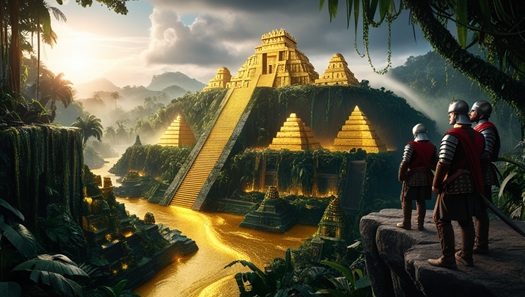
As tales spread through Europe, the story morphed dramatically.
What began as a single gilded chief evolved into rumors of an entire city of gold, then a vast kingdom, and eventually an empire paved with precious metals.
The myth shifted locations on maps — sometimes near Lake Guatavita in Colombia, other times deep in the Amazon or near a fictional Lake Parime in Guyana.
Explorers like Sir Walter Raleigh mounted expensive expeditions in search of this golden paradise, but none ever found it.
The El Dorado myth became a symbol of European colonial ambition and the dangerous allure of quick riches.
Archaeological Evidence: What Was Real and What Wasn’t
While the grand lost city of gold remains a myth, there is solid historical and archaeological backing for the original ritual.
In 1969, a magnificent gold artifact known as the Muisca Raft (or Golden Raft) was discovered in a cave near Bogotá. It depicts exactly the scene described in Spanish accounts: a central figure surrounded by attendants on a raft, preparing for the lake ceremony.
This artifact, now housed in Bogotá’s Gold Museum, provides strong evidence that the Muisca did perform such rituals.
Spanish attempts to drain Lake Guatavita in 1545 recovered hundreds of gold objects from the shallower edges, confirming that offerings were indeed made.
However, modern archaeological surveys of the lake have found far fewer artifacts than expected for a massive, repeated ceremony, suggesting the events were important but not on the extravagant scale later imagined.
No evidence of any grand golden city has ever surfaced despite centuries of searching.
The El Dorado myth was ultimately a case of cultural misunderstanding amplified by greed.
Why the Legend Endured for Centuries
The El Dorado myth appealed to deep human desires: wealth without limit, adventure, and the promise of an easy fortune.
For European powers in the Age of Exploration, it justified conquest and colonization.
Even after expeditions repeatedly failed, the story refused to die. It moved across maps and inspired literature, art, and later films.
Alexander von Humboldt’s scientific expeditions in the early 1800s finally helped disprove the existence of mythical lakes like Parime, yet the romantic idea of a lost city of gold lived on in popular imagination.
Today, the myth continues to fascinate us because it represents humanity’s eternal hope of discovering something extraordinary just beyond the horizon.
El Dorado in Modern Culture and Pop References
The legend has inspired countless books, movies, and games.
From Disney’s The Road to El Dorado to adventure video games, the name instantly evokes treasure hunting.
In India’s blockbuster KGF movies, “El Dorado” is used metaphorically. It refers to the Kolar Gold Fields in Karnataka once called the “El Dorado of India” due to its rich gold deposits.
The films dramatize the brutal power struggles over these mines, turning the name into a symbol of immense wealth and conflict in a modern Indian context.
You’ll also find El Dorado attached to rum brands, restaurants, cars, and drinks — all borrowing the name’s aura of luxury and rarity.
These contemporary uses show how the myth has transformed from a dangerous obsession into a powerful marketing symbol.
Practical Insights: Lessons from the El Dorado Myth
The story offers timeless lessons about critical thinking and the dangers of confirmation bias.
Explorers saw what they wanted to see, ignoring evidence that contradicted their golden dreams.
In today’s world of viral misinformation and get-rich-quick schemes, the El Dorado myth reminds us to question extraordinary claims and seek reliable sources.
It also highlights the importance of respecting indigenous cultures rather than twisting their traditions for personal gain.
Conclusion
So, does El Dorado even exist?
Not as the fabled lost city of gold that drove centuries of exploration and suffering.
The real El Dorado was a remarkable Muisca ritual — a man covered in gold making sacred offerings in a highland lake.
The myth that grew from this beautiful tradition reveals more about human nature and colonial ambition than about any hidden treasure.
While the golden city remains firmly in the realm of legend, the story of how it was born continues to captivate us.
Next time you hear about El Dorado, remember: sometimes the most valuable discoveries aren’t made of gold — they’re found in understanding the truth behind the tales.
What’s your favorite myth about hidden treasure? Share in the comments below and subscribe to OmniMyths for more deep dives into history’s greatest misconceptions.
Frequently Asked Questions
Q: Is El Dorado a myth or real?
A: El Dorado is a myth as a lost city of gold, but it has real historical roots. It originally referred to a Muisca chieftain covered in gold dust during a sacred ceremony at Lake Guatavita in Colombia. Spanish explorers misunderstood and exaggerated the story into tales of an entire golden city that never existed.
Q: Where is El Dorado in real life?
A: There is no physical El Dorado city. The legend points to the region around Lake Guatavita in the Colombian Andes, home of the Muisca people. Modern searches and scientific expeditions have confirmed no golden metropolis ever existed there or anywhere else in South America.
Q: What is El Dorado in KGF?
A: In the popular Indian films KGF, “El Dorado” is a dramatic reference to the Kolar Gold Fields in Karnataka. The movies portray the area as a modern-day gold-rich empire, drawing on its historical reputation as one of India’s richest gold mining regions.
Q: Which is the lost city of gold?
A: The most famous lost city of gold is the mythical El Dorado. Other legends include cities like Paititi or the Seven Cities of Cibola, but none have been proven to exist as described. El Dorado remains the most enduring symbol of this archetype.
Q: Does El Dorado even exist?
A: No, the golden city as described in legends does not exist. Archaeological evidence supports only the Muisca golden raft ceremony, not a vast city paved with gold. The myth grew from cultural misunderstanding and European greed during the conquest of the Americas.
Q: What does El Dorado mean?
A: “El Dorado” literally means “The Gilded One” in Spanish. It first described the Muisca ruler who was covered in gold dust for a religious ritual, not a place. Over time, the term shifted to represent any source of fabulous wealth.