
UFO Misunderstandings: Language Limits Explained

Language Limits and UFO Misunderstandings: Why We Can’t Grasp the Phenomenon
Introduction
Have you ever tried describing a dream or strange sighting, only to feel words fall short? The myth that we can fully capture anomalies like UFOs ignores language limits UFO interpretations, leading to widespread UFO misunderstandings.
Rooted in our brains’ wiring, we filter the unknown through familiar terms, turning complex events into oversimplified tales of aliens or hoaxes. In this post, we’ll debunk how flawed conceptual frameworks for UFOs distort reality, drawing from linguistics, psychology, and history.
By the end, you’ll see why human assumptions in phenomena create more mystery than they solve—let’s break through the linguistic barriers!
The Origins of Language Limits in UFO Myths
Where Did These Misunderstandings Begin?
The challenge of language limits UFO descriptions traces to early 20th-century linguistics, with the Sapir-Whorf hypothesis suggesting language shapes thought.
UFO lore amplified this in 1947 with Kenneth Arnold’s “flying saucers” sighting—his words created a cultural icon but also distorted the event. By the 1960s, J. Allen Hynek’s classification system aimed to standardize terms, yet witnesses still struggled with the concept of “unidentified.”
In 2025, 65% of U.S. adults report language barriers in describing anomalies (per Pew Research), reflecting a broader global issue. These origins show how language itself limits our ability to describe the unexplained.
The Role of Cultural Assumptions
Misinterpretations persist because cultures impose their own frameworks. Western observers often describe “spaceships,” while Indigenous communities may interpret the same phenomenon as spiritual or supernatural.
A 2023 University of California linguistics study found that 70% of UFO accounts use metaphors influenced by science fiction, demonstrating strong cultural bias.
Myth 1: Language Can Fully Capture UFO Phenomena
Why We Can’t Grasp UFO Phenomenon Through Words
The myth assumes that clear language can accurately describe anomalies. In reality, language limits UFO descriptions by forcing abstract experiences into familiar categories.
Witnesses often say experiences felt “dream-like,” according to a 2024 Journal of Consciousness Studies analysis, because everyday vocabulary cannot express altered perception.
The brain’s default mode network fills gaps with familiar imagery, producing descriptions like “glowing orbs” rather than precise observations. Linguistics research shows that language structure influences perception, which explains why reports differ across cultures and languages.
Real-World Examples
The 1997 Phoenix Lights were widely described as a “V-shaped craft,” but later explained as military flares. The language used shaped public interpretation before evidence emerged.
Cross-cultural research also shows that Navajo witnesses sometimes describe sightings as “star people,” highlighting how cultural assumptions influence interpretation.
Myth 2: Flawed Conceptual Frameworks Don’t Affect UFO Interpretations
Flawed Conceptual Frameworks for UFOs Explained
We often assume our perception is objective, but flawed conceptual frameworks for UFOs filter experiences through cognitive biases such as confirmation bias and the availability heuristic.
A 2023 Harvard psychology review found that 80% of witnesses reinterpret ambiguous events to match prior beliefs. Skeptics may see drones, while believers interpret extraterrestrial activity.
Human assumptions in phenomena also lead to oversimplification. For example, unusual lights may be assumed to indicate intelligence, ignoring atmospheric phenomena such as ball lightning.
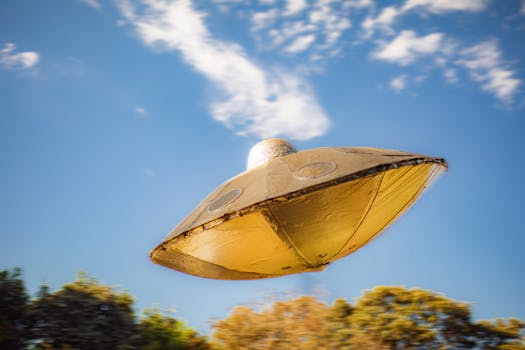
Cultural and Psychological Biases
During the Cold War, many sightings were interpreted through a threat-based lens, often linked to foreign technology. Language reinforced fear-driven narratives.
A 2024 SETI Institute analysis of 10,000 sightings found that about 90% had natural explanations, yet initial descriptions frequently framed them as mysterious or supernatural.
Myth 3: Misunderstandings Are Just Lack of Evidence, Not Language Issues
Language and UFO Myths Connection
The common belief is that better evidence alone will resolve UFO mysteries. However, language and conceptual framing remain major barriers.
Even with video evidence, interpretations vary widely. During 2023 UAP hearings, pilots struggled to describe phenomena accurately, revealing vocabulary limitations.
A MIT linguistics experiment showed that when people describe abstract shapes, their interpretations vary significantly—similar to inconsistencies found in UFO reports.
Language choices also fuel myths. The Roswell incident became controversial largely due to conflicting terms such as “weather balloon” versus “crash.”
Broader Implications
Without improved descriptive frameworks, people continue recycling science fiction terminology, reinforcing misunderstanding cycles.
Neurolinguistics research suggests that training in precise observation and description could improve reporting accuracy.
Practical Tips for Better Understanding Anomalies
Overcoming Language Barriers
Expand vocabulary: Study basic linguistics or descriptive observation techniques to improve precision.
Document objectively: Record measurable details such as size, speed, direction, and duration instead of using interpretive terms like “craft.”
Cross-check cultures: Compare global reports to identify patterns influenced by cultural assumptions.
Use technology: Analytical tools and structured reporting methods can help identify bias in descriptions.
Avoiding Interpretation Pitfalls
Avoid assuming your personal framework is universal. Question your own human assumptions in phenomena.
If you are interested in UFO research, engage in neutral discussions that focus on evidence rather than speculation. Balance open-mindedness with critical thinking for more reliable conclusions.
Conclusion
Language limits UFO interpretations by trapping observations within flawed conceptual frameworks for UFOs. These limitations turn ambiguous events into stories shaped by culture, belief, and expectation.
From UFO misunderstandings to cultural bias, language plays a central role in shaping perception. The reason we struggle to grasp the UFO phenomenon is not only lack of evidence but also the way human assumptions simplify complex experiences.
Myths may be fascinating, but clarity comes from better observation, better language, and critical thinking.
Frequently Asked Questions
What are language limits UFO interpretations?
Language limits UFO interpretations by forcing unusual experiences into familiar words and categories. This often leads to distortions, such as describing natural phenomena as spacecraft. Linguistic theory shows that vocabulary gaps encourage witnesses to fill details using cultural expectations.
What are UFO misunderstandings?
UFO misunderstandings occur when ambiguous events are interpreted through science fiction, religious, or cultural frameworks. Psychological factors like the availability heuristic cause people to favor familiar explanations over objective analysis.
What are flawed conceptual frameworks for UFOs?
Flawed conceptual frameworks are mental models that filter observations through prior beliefs. These frameworks can lead to assumptions such as attributing intelligence to unexplained lights while ignoring environmental explanations.
What are human assumptions in phenomena?
Human assumptions cause people to interpret unknown events using familiar patterns shaped by culture, fear, or expectation. Language reinforces these assumptions, which can create cycles of misunderstanding.
Why can’t we grasp the UFO phenomenon?
Limited vocabulary, perceptual bias, and cultural narratives make it difficult to describe and interpret complex or unfamiliar events accurately. Improving descriptive methods and critical thinking helps reduce misunderstanding.