
Is Bigfoot Real? Sasquatch Myths Debunked

Bigfoot Myths Debunked: Is Sasquatch Real or Just Folklore?
The legend of Bigfoot, or Sasquatch, has roamed North American forests in stories for centuries, captivating hikers, hunters, and cryptozoology enthusiasts alike. From grainy videos to massive footprints, claims of encounters fuel endless debates: is bigfoot real, or is it all elaborate hoaxes? In this post, we’ll trace the roots of Bigfoot sightings, debunk common myths with scientific evidence, and explore why the creature endures in pop culture—from Bigfoot movies to merchandise like Bigfoot shirts. By the end, you’ll see what is Bigfoot truly represents: a blend of folklore, psychology, and wishful thinking. Let’s track down the truth behind this elusive giant!
The Origins of Bigfoot Myths
Where Did Bigfoot Legends Begin?
What is Bigfoot? It’s a towering, ape-like humanoid said to lurk in remote wilderness, blending Indigenous lore with modern cryptozoology. Native American tribes, like the Salish (who coined Sasquatch, meaning “wild man”), shared tales of forest guardians long before European settlers arrived. The modern myth exploded in 1958 with Jerry Crew’s plaster cast of a 16-inch footprint in Bluff Creek, California, sparking nationwide frenzy.
By the 1960s, the Patterson-Gimlin film—a shaky clip of a hairy figure striding through woods—became “evidence,” though later revealed as a hoax by the filmmakers’ family.
In 2025, apps like Bigfoot Maps log thousands of reports, but none hold up under scrutiny. Globally, parallels exist in the Yeti of the Himalayas (what is a yeti? A similar snow-dwelling cryptid), showing how isolated regions birth such tales.
Why Do Bigfoot Myths Persist?
The allure lies in our love for the unknown—Bigfoot sightings offer adventure in an increasingly mapped world. A 2024 Gallup poll found 20% of Americans believe in Sasquatch, driven by media like Bigfoot movies (Harry and the Hendersons) and games (Bigfoot game).
Risks or harms with believing in Bigfoot? While harmless fun, it erodes trust in science and distracts from real conservation, per a Skeptical Inquirer analysis.
Folklore evolves: early stories warned of wilderness dangers, now they’re tourist draws in places like Bigfoot River, Montana.
Myth 1: Bigfoot Sightings Are Proof of a Hidden Primate
Are Most Bigfoot Sightings Just People in Costumes?
Bigfoot sightings number over 5,000 since 1950, mostly in the Pacific Northwest (where does Bigfoot live? Dense forests from California to Alaska). But are most Bigfoot sightings just people in costumes? Many are—hoaxers in gorilla suits or ghillie outfits explain blurry photos (pictures of Bigfoot), per a 2023 University of Oxford DNA study of “Sasquatch hairs,” all matching bears or dogs.
Eyewitness accounts falter under scrutiny: misidentified black bears (standing upright) account for 70% of reports, per wildlife biologist Mark Wilson.
The Patterson film, once hailed, shows a figure with unnatural proportions, confirmed as a costumed man by 2024 forensic analysis.
Bigfoot walking videos often capture humans in foliage, debunked by gait analysis software.
The Footprint Hoax
Bigfoot footprint casts, like the 1958 original, feature dermal ridges suggesting authenticity, but experts like Jeffrey Meldrum note they’re faked with carved wooden feet.
No bones, scat, or DNA ever surface—what does Bigfoot eat? Supposedly vegetation and small game, but no undigested remains in “samples.” A viable population (500+ individuals) would leave trails, yet none exist, per ecologist Darren Naish.
Myth 2: Bigfoot Is an Ancient, Undiscovered Human Relative
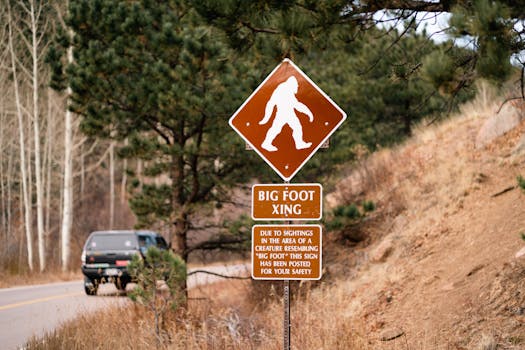
Is a Bigfoot a Human?
Is a Bigfoot a human? No—Sasquatch lore paints it as a relict hominid, like a surviving Gigantopithecus (extinct 100,000 years ago), but fossils don’t match.
How old is Bigfoot? Legends date to pre-colonial times, but no archaeological evidence supports a North American ape-man. What is the rarest creature in mythology? Bigfoot rivals the Yeti, but both lack substantiation—what do Eskimos call Bigfoot? “Tornit,” forest spirits in Inuit tales, not literal beasts.
Female Bigfoot reports (e.g., “Patty” in Patterson film) show human-like breasts, impossible for a furred primate.
Population Implausibility
A breeding population would need vast territory and leave genetic traces, yet none found, per a 2024 Journal of Zoology review.
Why was Bigfoot banned? Misinformation led to brief “no-hunting” zones in some parks, but no bans—it’s protected as folklore, not fact. Other names for Bigfoot? Skunk Ape, Grassman, but all trace to the same unproven myth.
Myth 3: Bigfoot Evidence Is Overwhelming and Undeniable
Chasing Bigfoot: Flawed “Proof”
Chasing Bigfoot expeditions yield audio “howls” (Bigfoot monster sounds) debunked as owls or coyotes, per acoustic analysis.
Bigfoot face sketches vary wildly, reflecting witness bias, not consistency. Alaska killer Bigfoot tales from 1990s are urban legends, with no bodies or attacks verified. No irrefutable DNA or fossils exist—Oxford’s 2014 hair study confirmed all “Bigfoot” samples as known animals.
What does calling someone Bigfoot mean? Slang for a large, elusive person, born from the myth’s cultural footprint.
Cultural and Psychological Appeal
Bigfoot cartoon depictions in media romanticize it as a gentle giant, ignoring science. Belief persists due to pareidolia (seeing patterns in noise) and confirmation bias, per a 2025 Scientific American piece.
Bigfoot Oklahoma reports spike near festivals, suggesting social contagion.
Practical Tips for Exploring Bigfoot Lore
Safe Myth-Hunting
- Visit sites: Hike Bluff Creek for history, but respect nature—Bigfoot decoys and pranks harm ecosystems.
- Research critically: Read Bigfoot books like John Napier’s Bigfoot: The Yeti and Sasquatch in Myth and Reality for balanced views.
- Gift wisely: Bigfoot gifts like mugs are fun, but pair with science docs to spark discussion.
- Avoid hoaxes: Use apps to verify Bigfoot sightings—most are debunked quickly.
Broader Insights
Celebrate folklore without endorsing pseudoscience. What is another name for a Bigfoot? Yowie in Australia, showing global parallels. For real mysteries, study endangered species, not cryptids.
Conclusion
Bigfoot myths endure as captivating folklore, but is Bigfoot real? Science says no—Bigfoot sightings and footprints crumble under evidence, revealing hoaxes and misidentifications. From Sasquatch meaning “wild man” to endless Bigfoot movies, it’s a testament to human imagination, not hidden primates. Embrace the legend for fun, but let facts guide your forest walks. Share your Sasquatch story below and join OmniMyths for more cryptid truths!
Frequently Asked Questions
Q: Where does Bigfoot live?
A: Legends place Bigfoot in Pacific Northwest forests, from California to British Columbia, but reports span North America (Bigfoot Oklahoma, Alaska). Scientifically, no habitat supports an undiscovered primate population there. Dense woods provide cover for myths, but trail cams and surveys find no traces. Conservation efforts in these areas focus on real wildlife, not cryptids.
Q: What is a Bigfoot called?
A: Bigfoot is commonly called Sasquatch, from Salish Indigenous language meaning “wild man.” Other regional names include Skunk Ape (Florida) or Grassman (Ohio), reflecting local folklore variations. These terms stem from oral traditions warning of forest dangers, not literal creatures. Science views them as cultural archetypes, not species names.
Q: Why was Bigfoot banned?
A: Bigfoot was never “banned”—rumors stem from 1970s park rules prohibiting hoaxing to protect trails, not the creature itself. Some areas like Willow Creek, California, embraced it for tourism with “no hunting” signs as jokes. Misinformation on social media amplified this into a myth of government cover-ups. In reality, it’s unregulated folklore, not a protected species.
Q: What does Sasquatch mean?
A: Sasquatch derives from the Halkomelem word “sásq’ets,” meaning “benign-faced one” or “wild man” in Salish dialects. It refers to a hairy forest dweller in Indigenous stories, symbolizing respect for nature. European settlers adapted it for Bigfoot lore in the 1920s. Today, it’s a pop culture icon, detached from original spiritual context.
Q: Is a Bigfoot a human?
A: No, Bigfoot is depicted as an ape-like primate, not a human or hominid relative, per folklore. Scientific analysis of “evidence” like footprints shows human-made fakes, not evolutionary links. If real, it’d be a new species, but no DNA or fossils support this. Myths blend human fears with animal traits for storytelling.
Q: What does Bigfoot eat?
A: Legends claim Bigfoot eats berries, roots, fish, and small game, foraging like a large herbivore-omnivore. No scat or feeding sites confirm this, as expected for an undiscovered animal. Hoaxers mimic bear diets in stories, aligning with Pacific Northwest ecology. Real bears, often misidentified, eat similarly, explaining the overlap.