
Charon Myths: Truth About the Underworld Ferryman

Charon Myths – The Ferryman of the Underworld Debunked
In the shadowy realms of ancient Greek lore, few figures evoke as much intrigue as Charon, the grim boatman shuttling souls to the afterlife. Often called the ferryman mythology icon, his tales have inspired art, literature, and even modern media, but misconceptions abound—from his supposed evil nature to invented romances like charon and prometheus. What is the myth of Charon? This post dives into classical stories, debunks modern twists, and explores cultural influences. By the end, you’ll see how this underworld guardian reflects human fears of death, with science and history offering grounded explanations. Let’s cross the river of myth together!
The Origins of Charon Myths
Birth of the Ferryman
Charon emerges from the earliest Greek texts as a psychopomp—a guide for the dead—first mentioned in the 6th-century BC epic Minyas, where he aids a descent into Hades.
As the son of Erebus (darkness) and Nyx (night), he embodies the inevitable transition from life to death, ferrying souls across the rivers Acheron or Styx for a fee—an obol coin placed in the deceased’s mouth.
This practice, known as Charon’s obol, appears in archaeological finds from ancient graves, blending ritual with legend.
Over centuries, poets like Virgil in the Aeneid refined his role, portraying him as a reluctant gatekeeper who denies passage to the unburied or unpaid, emphasizing themes of justice in the afterlife.
Cultural Evolution
By Roman times, Charon merged with local beliefs, influencing figures like the Etruscan Charun, a winged demon with a hammer—a far cry from the Greek boatman.
Medieval literature, such as Dante’s Inferno, borrowed Virgil’s depiction, showing Charon as a fiery-eyed elder beating sinners with his oar, blending pagan myth with Christian imagery.
In 2025, modern adaptations in shows like Netflix’s Kaos introduce fictional elements, such as romantic ties to Prometheus, which have no basis in ancient sources but spark online debates.
This evolution highlights how myths adapt to cultural needs, from explaining death rituals to exploring morality.
Myth 1: Charon Is an Evil or Punishing Figure
Is Charon Good or Bad?
Is Charon good or bad? Neither—he’s neutral, a dutiful servant enforcing underworld rules without malice or mercy.
Ancient vases depict him as a rugged seaman, not a demon, receiving souls from Hermes, the god of transitions.
The myth of his “punishment” for allowing unauthorized passage is absent in classics; instead, he’s immovable, refusing the unburied like Patroclus in Homer’s Iliad.
Later Christian influences, like in Dante, cast him as wrathful, but this distorts the Greek view where he’s simply functional, like a toll collector in the afterlife.
Appearance and Symbols
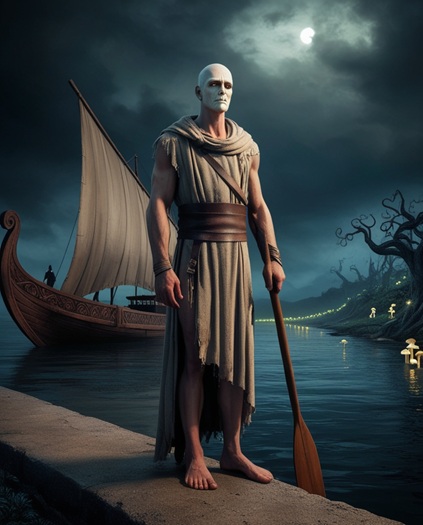
What did Charon look like? Sources like Virgil describe him with an unkempt beard, fiery eyes, and ragged clothes, poling his boat across murky waters.
His oar symbolizes passage, while the coin payment underscores ancient funeral customs. Modern art, from Michelangelo’s Last Judgment to video games, often skeletalizes him, blending with Grim Reaper imagery, but classics portray him as aged and human-like.
Charon pronunciation? It’s “KAIR-on” in English, from the Greek “KHAR-ohn,” evoking his keen gaze.
Myth 2: Charon Was Easily Tricked or Had Romantic Ties
Heroes Who Crossed Charon
Living heroes occasionally bypassed Charon, but not through trickery alone.
Charon and Orpheus:
The musician charmed Charon with his lyre to cross the Styx in search of Eurydice, a rare exception granted by melody’s power.
When Orpheus tried a second time, Charon refused, upholding rules.
Heracles overpowered him during his labors, forcing passage to capture Cerberus, showing brute force over deception.
Who tricked Charon? Psyche used divine aid from Eros, but Charon rarely fell for ruses, demanding payment strictly.
Modern Misconceptions
Charon and Prometheus: No classical relationship exists; Prometheus, chained for stealing fire, never interacts with Charon in myths.
Recent media like Kaos invents a romance (are Charon and Prometheus lovers?), but this is fan fiction, not lore.
Why was Charon killed? He wasn’t—immortal as a chthonic deity, he endures eternally in the underworld, per ancient texts.
These additions reflect contemporary storytelling, not historical accuracy.
Myth 3: Charon Has a Place in Christianity or Modern Religions
Is Charon in Christianity?
Is Charon in Christianity? No direct equivalent, though Dante’s Inferno adapts him as a demonic boatman in Hell, merging pagan and Christian elements.
Why is Charon in Dante’s Inferno? Dante draws from Virgil to symbolize judgment, but Christianity focuses on angels or divine ferrying, not a coin-paid boatman.
Puritan views rejected such myths, seeing them as pagan relics.
LGBT in Greek Mythology
Was there any LGBT in Greek mythology? Yes, figures like Achilles and Patroclus suggest same-sex bonds, but Charon has no romantic myths.
Which Greek god was asexual? Hestia and Athena prioritized virginity, but asexuality as a modern concept doesn’t directly apply. Does Athena support LGBTQ? As a goddess of wisdom, she’s neutral, but myths show diverse relationships among gods.
Practical Tips for Understanding Charon Myths
Exploring Mythology Today
- Read classics: Start with Virgil’s Aeneid or Ovid’s Metamorphoses for Charon’s stories.
- Debunk hauntings: Modern “ghost ferries” in folklore often stem from psychological grief, not literal spirits.
- Cultural visits: Museums with Attic vases showcase Charon’s art.
Avoiding Modern Twists
Don’t conflate myths with fan theories; Charon and Prometheus have no mythological basis. For accurate lore, use classical sources and verified spellings.
Conclusion
Charon myths paint a neutral ferryman bridging life and death, not the villain or lover modern tales invent. From Charon the ferryman demanding his obol to heroes like Charon and Orpheus charming passage, his role underscores ancient views on mortality. Science explains “ghostly” fears as brain tricks, while history shows myths evolve. Whether pondering is Charon good or bad or his underworld boat, embrace the symbolism without superstition. Share your myth take below and join OmniMyths for more ancient truths!
Frequently Asked Questions
Q: What is the myth of Charon?
A: Charon ferries souls across the Styx or Acheron for an obol coin, denying the unburied, per ancient texts like the Aeneid. As son of Erebus and Nyx, he’s neutral, not punishing—his role ensures order in the afterlife. Myths highlight rituals like coin placement in graves for passage. Modern adaptations add drama, but classics focus on his dutiful nature.
Q: Is Charon good or bad?
A: Charon is neither good nor bad—he’s a neutral psychopomp enforcing underworld rules without emotion, per Greek lore. Depicted as gruff, he serves Hades loyally, allowing passage only to the paid and buried. Dante’s wrathful version twists this for Christian allegory.
Q: What are some myths featuring Charon?
A: In Orpheus’ tale, Charon is charmed by music to allow passage for Eurydice’s rescue, but refuses a second crossing. Heracles overpowers him to fetch Cerberus, showing force over cunning. Aeneas pays with a golden bough for entry, emphasizing ritual. No romance with Prometheus exists in classics—modern fiction invents it.
Q: What was Charon’s punishment?
A: Charon faces no punishment in myths—he’s eternal and dutiful, never rebelling like Prometheus. Some tales show him overpowered by heroes, but that’s not discipline. His role is fixed, symbolizing death’s inevitability.
Q: Who tricked Charon?
A: Orpheus charmed Charon with his lyre to cross once, using music over deceit. Psyche used divine help from Eros, but Charon rarely falls for tricks—he demands payment strictly. Heracles used force, not trickery, in his labor.
Q: What did Charon look like?
A: Charon appears as a rugged, elderly seaman with a hairy beard, fiery eyes, and ragged clothes, per Virgil. Ancient vases show him with a pole, receiving souls from Hermes. Later art skeletalizes him, blending with death figures like the Reaper.