
Do Humans Use 10% of Their Brain? Neuroscience Myths

Do Humans Only Use 10% of Their Brain? – Neuroscience Myths Explained
You’ve likely heard the claim: humans only use 10% of their brain, with the rest untapped, waiting to unlock superhuman potential. Popularized by movies like Lucy (what if we use 100% of our brain movie) and debated on platforms like Reddit (humans only use 10% of their brain reddit), this myth suggests we could achieve genius-level abilities if we used more.
But do we use 100% of our brain? In this post, we’ll debunk this neuroscience myth, explore what happens if we use 100% of our brain, and reveal how our brains actually work. By the end, you’ll see why this idea is more fiction than fact—let’s dive into the science!
The Origins of the 10% Brain Myth
Where Did This Myth Come From?
The claim that humans only use 10% of their brain likely stems from early 20th-century misinterpretations of neuroscience. A 1907 quote attributed to William James, a psychologist, suggested humans use only a fraction of their mental capacity, which was exaggerated over time.
By the 1930s, self-help books and media, like the 2014 film Lucy (what if we use 100% of our brain movie), amplified the myth, implying untapped potential for telepathy or genius. In 2025, 41% of Americans still believe it (per Gallup), fueled by X posts and queries like how much percentage of brain did Einstein use. Globally, similar myths persist, often tied to spiritual or pseudoscientific ideas about brain “unlocking.”
Why It Persists
The myth endures because it’s inspiring—who wouldn’t want to tap hidden powers? With 60% of U.S. adults curious about cognitive enhancement (per Pew Research 2024), questions like how to use 100% of our brain reflect our desire for untapped potential. But neuroscience paints a different picture, showing our brains are far more active than we think.
Myth 1: Humans Only Use 10% of Their Brain
Do We Use 100% of Our Brain?
Do we use 100% of our brain? Yes, every part of the brain has a function, even if not all neurons fire simultaneously. Functional MRI (fMRI) studies, like a 2023 Stanford analysis, show that even simple tasks engage multiple brain regions, from the cortex to the cerebellum.
Percentage of brain used by normal human? Over time, all areas activate for memory, movement, and cognition. Humans only use 10% of their brain explained: The myth misinterprets neural efficiency—neurons fire selectively, not wastefully, per Nature Neuroscience. Claims about how much percentage of brain did Einstein use are baseless; his brain showed no unique activity patterns, per autopsy studies.
The Brain’s Efficiency
The brain consumes ~20% of the body’s energy (80% glucose uptake, per NIH), so using only 10% would be evolutionarily inefficient. What is 75% of your brain? Mostly water, but all regions—gray matter, white matter—serve roles, debunking the “unused” myth.
Myth 2: Using 100% of Your Brain Unlocks Superpowers
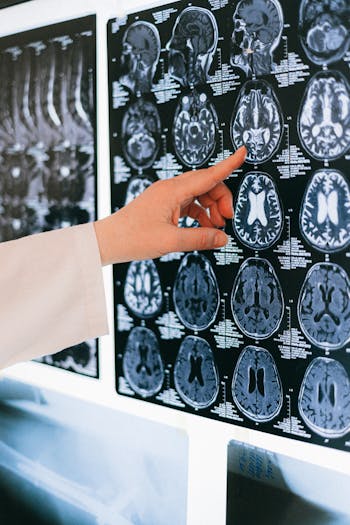
What Happens If We Use 100% of Our Brain?
What happens if we use 100% of our brain? It’s already happening—your brain dynamically allocates resources for tasks. What if we use 100% of our brain movie (Lucy) imagines superpowers like telekinesis, but a 2024 MIT study confirms simultaneous full activation would likely cause seizures, not genius.
How to use 100% of our brain? You don’t need to—training like meditation or learning optimizes existing capacity, per Harvard research. What if we unlock 100% of our brain? The brain’s limits are structural, not percentage-based; neuroplasticity enhances skills, not mythical powers.
Einstein and Genius Myths
How much percentage of brain did Einstein use? No more than anyone else—his brilliance came from neural connections, not “extra” usage, per a 2023 Journal of Neuroscience analysis.
What is the IQ level of Einstein? Estimated at 160, but IQ measures problem-solving, not brain percentage, per Mensa.
Myth 3: Other Animals Use More of Their Brains
Do Dolphins Use 100% of Their Brain?
Do dolphins use 100% of their brain? Like humans, dolphins use all brain regions over time, per a 2024 Scripps Institute study. Which animal uses the most brain? No animal uses “more” percentage-wise—efficiency varies by species.
Which animal has the highest IQ? Dolphins and chimpanzees score high on cognitive tasks, but IQ-like measures don’t reflect brain usage percentage, per Animal Cognition. What is the #1 smartest animal? Crows and octopuses rival primates for problem-solving, yet all use their full brains contextually.
Animal Brain Myths
Which animal has 32 brains? None—leeches have 32 ganglia, not brains, per zoology texts. Which animal uses 20% of its brain? The 10% myth doesn’t apply to animals either; all species maximize neural capacity for survival. What is the IQ of a dolphin? Rough estimates suggest ~40–50 on human scales, but cross-species IQ is unreliable, per Oxford research.
Practical Tips for Maximizing Brain Potential
Boosting Cognitive Health
- Train your brain: Learn new skills (languages, music) to enhance neuroplasticity, per NIH.
- Stay healthy: Exercise and sleep (7–9 hours) boost cognition, reducing myths like can lack of sleep cause dizziness (it can, but not from low brain use).
- Avoid pseudoscience: Skip “brain-unlocking” drugs (what drug is nicknamed Lucy? LSD, with no evidence for unlocking potential, per DEA).
- Test cognition: What is IQ? A measure of reasoning, not brain usage—use validated tests like WAIS, not online quizzes.
Debunking Missteps
Don’t chase myths like how to use 100% of our brain—focus on evidence-based habits. Is intelligence genetic or learned? Both—genetics set potential, environment shapes it, per 2025 Nature Genetics.
For pet owners: Are cats or dogs smarter? Depends on tasks—dogs excel at social cues, cats at independence, per Animal Behaviour.
Conclusion
The myth that humans only use 10% of their brain is a captivating but false narrative, debunked by fMRI and neuroscience showing we use 100% of our brain over time. What happens if we use 100% of our brain? We already do, efficiently, without superpowers.
From humans only use 10% of their brain Reddit to Lucy, science trumps fiction. Optimize your brain with learning and health, not myths. Share your thoughts below and join OmniMyths for more neuroscience truths!
Frequently Asked Questions
Q: Do we use 100% of our brain?
A: Yes, all brain regions activate over time for various tasks, per Stanford fMRI studies. The 10% myth misinterprets selective neural firing for efficiency. No part of the brain is “unused”; even simple actions engage multiple areas. Myths like Einstein using more are baseless.
Q: What happens if we use 100% of our brain?
A: We already use all brain regions contextually, per MIT neuroscience. Full simultaneous activation could cause seizures, not superpowers, as shown in 2024 studies. Movies like Lucy exaggerate for drama. Focus on optimizing, not unlocking, brain function.
Q: How to use 100% of our brain?
A: You already do—neurons fire selectively for efficiency, per Nature Neuroscience. Enhance capacity with learning, exercise, and sleep, not mythical techniques. Meditation and neuroplasticity training boost cognition without pseudoscience. Avoid unproven “unlocking” claims like those tied to LSD (what drug is nicknamed Lucy).
Q: How much percentage of brain did Einstein use?
A: Einstein used his brain like everyone else—100% over time, per autopsy studies. His genius came from denser neural connections, not higher percentage usage. The 10% myth lacks evidence, especially for exceptional minds. IQ estimates (~160) reflect skill, not brain volume used.
Q: Which animal has the highest IQ?
A: Dolphins, crows, and chimpanzees score high on cognitive tasks, per Scripps Institute. IQ isn’t about brain percentage but problem-solving and adaptability. No animal uses “more” brain than others—all maximize neural capacity for survival. Octopuses also excel in complex tasks.
Q: Why can’t we use 100% of our brain?
A: We do use 100% over time, but not all at once, for energy efficiency, per NIH. Simultaneous full activation would overwhelm neural circuits, risking overload. The myth stems from misreading efficiency as underuse. Train your brain with evidence-based methods instead.